
Artificial Intelligence’s Impact on Global Industries and the Future Industrial Status of High-Performance Computing Chips
At present, artificial intelligence is undergoing rapid iterative development, fully penetrating major global industries, restructuring production modes, industrial structures and commercial logic, and emerging as a core driving force for global economic growth. As the fundamental hardware cornerstone of artificial intelligence, high-performance computing chips face soaring market demand and occupy an irreplaceable core strategic position in the global industrial landscape, evolving into a pivotal track for global technological competition.
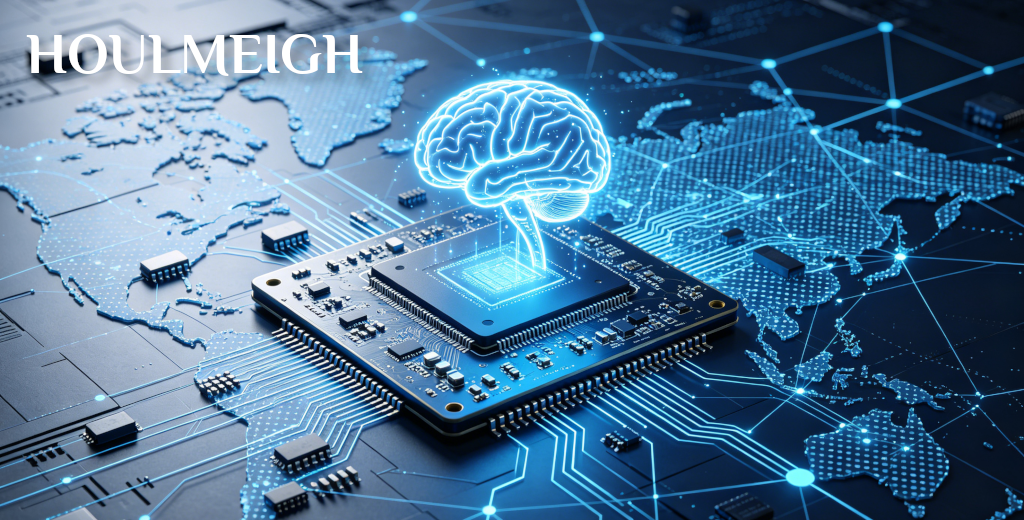
Artificial intelligence is comprehensively transforming global real industries and service sectors, accelerating the intelligent upgrading of traditional industries. In the industrial sector, intelligent algorithms integrated with industrial robots and IoT equipment realize automated production processes and precise quality inspection, greatly reducing manual errors and production costs and popularizing intelligent manufacturing. In the financial industry, AI leverages big data to implement risk management, intelligent risk control and quantitative trading, improving the efficiency of financial services and mitigating market risks. In transportation, the continuous implementation of autonomous driving technology empowers smart transportation systems and optimizes the efficiency of travel and logistics. Furthermore, AI has achieved in-depth application in medical pharmacy, new energy, cultural media and other fields. It shortens the research and development cycle of drugs and optimizes new energy dispatching, cutting costs and boosting efficiency across the whole industrial chain and injecting new vitality into traditional industries.
The vigorous development of the AI industry has spawned massive computing power demands, steadily elevating the industrial status of high-performance computing chips. Computing power serves as the core support for AI model training, data operation and intelligent reasoning. As the carrier of computing power, computing chips including GPU, ASIC and NPU are equipped with powerful parallel computing capability to meet the massive data processing needs of artificial intelligence. Industry statistics show that the global computing power market scale exceeded 300 billion US dollars in 2025, while the scale of the AI chip market keeps expanding with a compound annual growth rate exceeding 25%. Computing chips have become essential core products in the technological industrial chain.
From the perspective of industrial strategy, high-performance computing chips are crucial to dominating global technological discourse power. On one hand, leading global tech enterprises are stepping up independent chip research and development and optimizing chip architectures to adapt to large model training and terminal reasoning scenarios, making computing chips the core component of corporate technological barriers. On the other hand, countries worldwide have issued supportive policies to promote localized R&D and production of computing chips and break technological monopolies. The industry has formed a differentiated development pattern: general-purpose GPUs are applicable to a wide range of computing scenarios, while dedicated ASIC chips seize the reasoning market with advantages of low power consumption and low cost, and diversified chip systems cater to varied computing demands of different industries.

Looking ahead, high-performance computing chips will develop toward high computing power, low power consumption and localized independent innovation. With the widespread popularization of generative AI and AI agents, the global computing power gap will keep widening, resulting in a long-term supply-demand imbalance of computing chips. Meanwhile, the expansion of downstream industries such as new energy, intelligent manufacturing and autonomous driving will continuously drive the iteration and upgrading of chips. Against this backdrop, it is imperative to increase investment in chip R&D, improve the semiconductor industrial chain, break through technical bottlenecks in photolithography and packaging, and enhance the competitiveness of domestic high-performance computing chips.
In conclusion, artificial intelligence is profoundly reshaping the global industrial ecosystem and promoting quality improvement and efficiency enhancement across all walks of life. As the core hardware foundation of artificial intelligence, high-performance computing chips are not only essential resources for industrial development, but also strategic commanding heights in national technological competition. In the future, technological breakthroughs in computing chips will further unleash the potential of the AI industry and push the global industry into a brand-new intelligent and digital development era.
HoulMeigh Service Team
